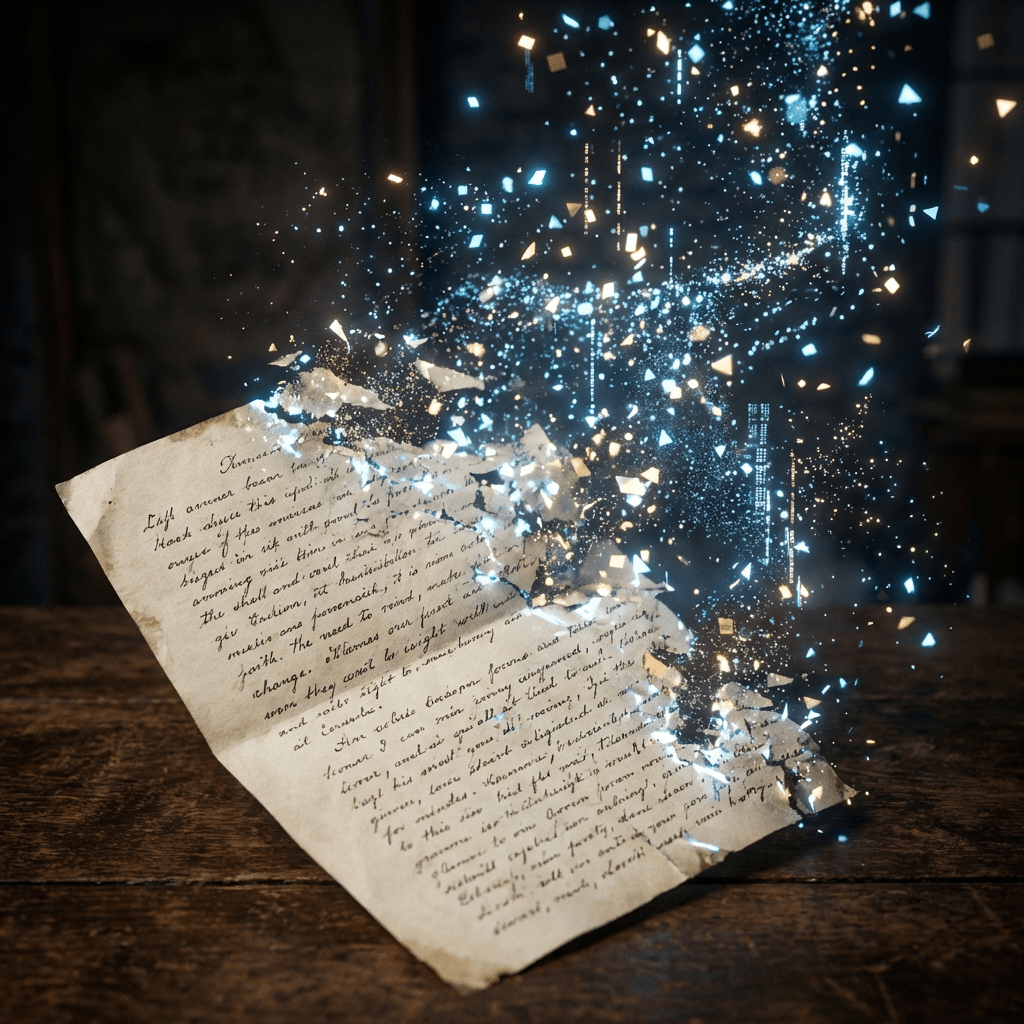
I remember the first time a response from an AI stopped me.
Not because it was wrong. Not because it was spectacular. But because it was — almost — the right thing to say. Close enough to human that I paused, and looked again, the way you look twice at a reflection that moves a half-second too slow.
That was a year or two ago. The feeling has not entirely gone away. But what it means has changed.
I work in technology. I have spent years learning how systems behave — how to read them, trust them, and know when not to. So when tools like Claude began appearing in my daily work, I approached them the way I approach anything new in a system: carefully, with questions.
What I found was not what I expected.
I expected productivity. What I got was something closer to a conversation — the particular kind of conversation you have when someone asks you exactly the right question at exactly the right moment, and you realize you had the answer in you all along, but needed to be asked.
That is what AI transformation feels like from the inside. Not automation. Not replacement. Something quieter: an invitation to think more clearly.
There is a phrase I keep returning to — AI transformation. In enterprise settings, in strategy documents, in conference talks, it means large things. Restructured workflows. Reskilled teams. New value chains. It is the language of scale, and it is not wrong.
But I think about transformation differently now.
I think about the small moments. The draft that took thirty minutes, done in five — not because a machine wrote it, but because I no longer had to fight the blank page alone. The security assessment where I asked Claude to challenge my assumptions, and it found the gap I had been circling without naming. The meeting I prepared for at midnight, with no colleagues awake, and something available to think alongside me.
These are small transformations. But they accumulate.
I am cautious by nature — it is an occupational habit. I do not trust systems I cannot examine. I do not accept outputs I cannot trace. And so I have watched myself, carefully, as I have begun to rely on these tools.
What I notice is this: the work that remains most human is the work of judgment. Of context. Of knowing what the question behind the question actually is.
AI can help me think faster. It cannot tell me what matters. That part is still mine.
And perhaps that is the most honest definition of transformation I can offer: not a shift in what machines can do, but a clearer view of what only people can.
I do not know what the next year looks like. No one does, not really — and anyone who says otherwise is either very confident or not paying close enough attention.
But I find myself less afraid than I expected to be. Curious, mostly. The same feeling I get when the light changes in a room and something that was ordinary becomes, briefly, worth looking at.
That is where I am with all of this. Still looking.
 Photography, Technology, and Me
Bình luận về bài viết này